

How Singapore Sleeps 2026
Singapore isrunning on empty.
Singapore's workers are losing sleep — and bringing the consequences to work.
A new survey of 1,000 working adults in Singapore reveals a persistent sleep deficit, widespread productivity impact and a potentially overlooked risk of obstructive sleep apnea (OSA).
Jointly commissioned by Easmed and The Air Station
easmed.com/sgsleepsurvey2026
Scroll ↓

Hours
What Singapore workers actually sleep on a typical work night.
Hours
What they say they need to wake up refreshed.
Hours
The average nightly sleep deficit.
%
Report some drop in productivity after a poor night's sleep.
%
Screen at elevated risk of OSA using the study's modified STOP-Bang screener.

Poor sleep isn't simply a nighttime problem. It follows us into the working day.
Poor sleep is already affecting how Singapore works. After a bad night's sleep, almost everyone surveyed reported some impact on productivity — and more than half estimated the decline at over 20%.
“Sleep health is not just a personal wellbeingissue. It is a workforce performance issue.”
Supporting indicators
- 01.
Say poor sleep makes it harder to concentrate or stay focused at least 1–2 times a week
- 02.
Say poor sleep leaves them irritable, low or short-tempered at least 1–2 times a week
Reported productivity impact after a poor night's sleep
Sleep-related breathing disorder
Obstructive sleep apnea (OSA) is a sleep-related breathing disorder in which breathing repeatedly stops or becomes restricted during sleep.
report daytime tiredness, fatigue or sleepiness.
report loud snoring that can be heard by others.
have had a partner notice breathing pauses or gasping during sleep.
cannot meaningfully describe OSA.
27% have never heard of it. 33% have heard the name but don't really know what it is. Only 40% know roughly what OSA is or know it well/have personal experience.
- Never heard of it
- Heard the name but don't really know what it is
- Know roughly what OSA is, or know it well / have personal experience
Myth or fact? Answer before revealing the survey result.
01
“Daytime sleepiness is just a normal part of a busy working life.”
02
“Loud, regular snoring is usually a sign of deep, healthy sleep.”
03
“Brief pauses in breathing during sleep are harmless.”
04
“Needing little sleep is a sign of being committed and hardworking.”
56% have never used a sleep tracker, spoken to a doctor about their sleep, undergone a formal sleep study or been diagnosed with a sleep condition.
So what's stopping Singapore from getting checked?
- 01
Cost of diagnosis or treatment
- 02
Don't know where to go
- 03
Don't think the problem is serious enough
- 04
Fear of what the diagnosis might be
- 05
Don't have time
The barriers aren't just about awareness. They're about access.
want at least one form of sleep-related support from their employer.
Employees are asking for more sleep. The data suggests some may need something more: awareness, screening and access to care.
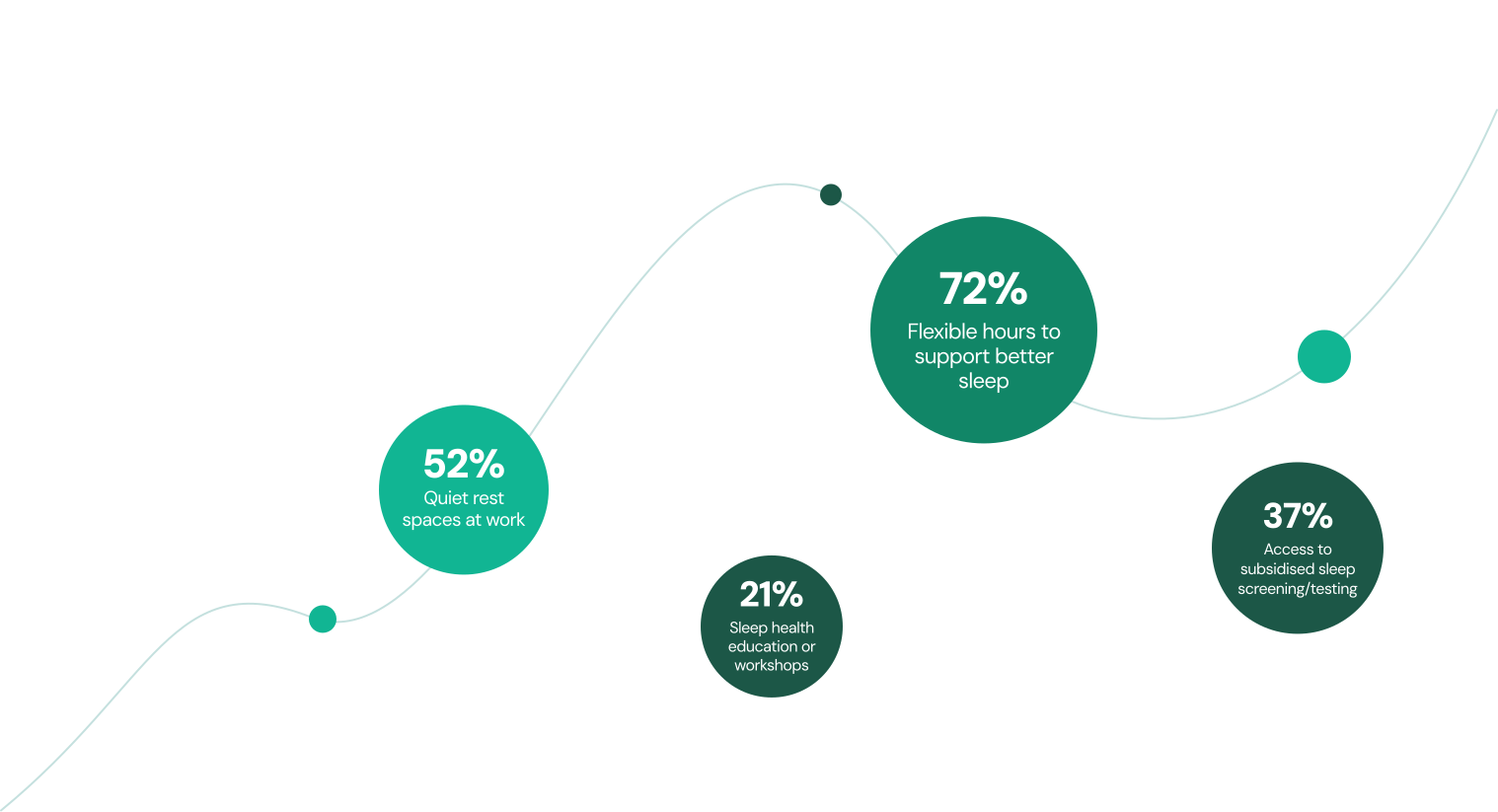
- Flexible hours to support better sleep
- Quiet rest spaces at work
- Access to subsidised sleep screening/testing
- Sleep health education or workshops

You don't need to feel exhausted to be at risk.
Start with awareness. Learn your risk factors and understand whether further assessment may be appropriate.
This is a screening tool and does not provide a medical diagnosis. Individuals with concerns should consult an appropriate healthcare professional.
Turn awareness into action. Easmed and The Air Station work with doctors, sleep specialists and healthcare professionals to help organisations make sleep health part of employee wellbeing and preventive health. Whether an organisation wants to begin with an expert talk, offer employees access to sleep-health screening, or develop a broader workplace programme, we can tailor an approach to its workforce.
01
Educate
Sleep health talks led by doctors, sleep specialists and healthcare professionals, covering sleep, OSA, snoring, cardiovascular health, workplace performance and other relevant topics.
02
Screen
Corporate sleep-health risk assessment and screening services that help employees identify potential sleep issues and understand appropriate next steps, including testing or medical follow-up where indicated.
03
Partner
Broader employee wellbeing initiatives combining education, awareness, screening and pathways to appropriate care. Programmes can be customised to workforce needs and corporate wellbeing objectives.



Could your employees benefit from better sleep? Bring credible sleep-health education and screening into your workplace with Easmed and The Air Station.

Methodology
The Singapore Workforce Sleep Survey 2026 surveyed 1,000 working adults in Singapore aged 30–60, with an equal gender split. Respondents were tertiary educated and worked in office-based or primarily office-based roles. Fieldwork was conducted online from 4–17 July 2026 through Milieu's proprietary survey community.

Easmed × The Air Station
Easmed
A Singapore-headquartered medical technology and healthcare solutions company working with healthcare professionals and partners across Asia to advance access to clinically meaningful technologies, education and patient care.